


How to Write a Career Change Resume That Commands Attention (Step-by-Step Guide)
Making a career change? Learn how to write a resume that highlights transferable skills, reframes your experience, and positions you as a top candidate—even if you’re starting in a new field.
Key Takeaways
- Your resume must shout, “I’m the perfect fit for this role,” even if you’re switching industries.
- Transferable skills are your currency—use them to bridge the gap between your old and new careers.
- Use metrics and specifics to build credibility. Vagueness kills confidence.
- Pick a resume format that aligns with your strategy: functional, chronological, or hybrid.
- Your resume isn’t your life story—it’s a tool to show how you can solve a company’s problem. Keep it concise and tailored.

Why Most Career Change Resumes Fail
Here’s the brutal truth: Nobody cares about your career history as much as they care about what you can do for them right now.
Most people think of resumes as autobiographies. They slap every job they’ve ever had onto the page and call it a day. That doesn’t work—especially when you’re pivoting into a new field.
When you’re changing careers, your resume needs to do two things:
- Prove you can deliver results in the new field.
- Make the hiring manager’s job easier by connecting the dots between your past and your future.
This isn’t about trickery—it’s about strategy. You already have valuable skills; now you need to frame them in a way that’s relevant to the new job. Here’s how.
Step 1: Define Your Value Proposition
What’s your unfair advantage?
This isn’t about being the most experienced person in the field (because you’re not). It’s about identifying the unique mix of skills, experiences, and perspectives that you bring to the table.
Ask Yourself:
- What skills do I excel at that are relevant to the new field?
- What achievements am I most proud of, and how can they translate?
- Why would a company benefit from hiring someone with my background?
Example:
If you’re a teacher transitioning into corporate training, your unfair advantage might be your ability to break down complex concepts into simple, actionable steps—a skill that directly applies to employee training programs.
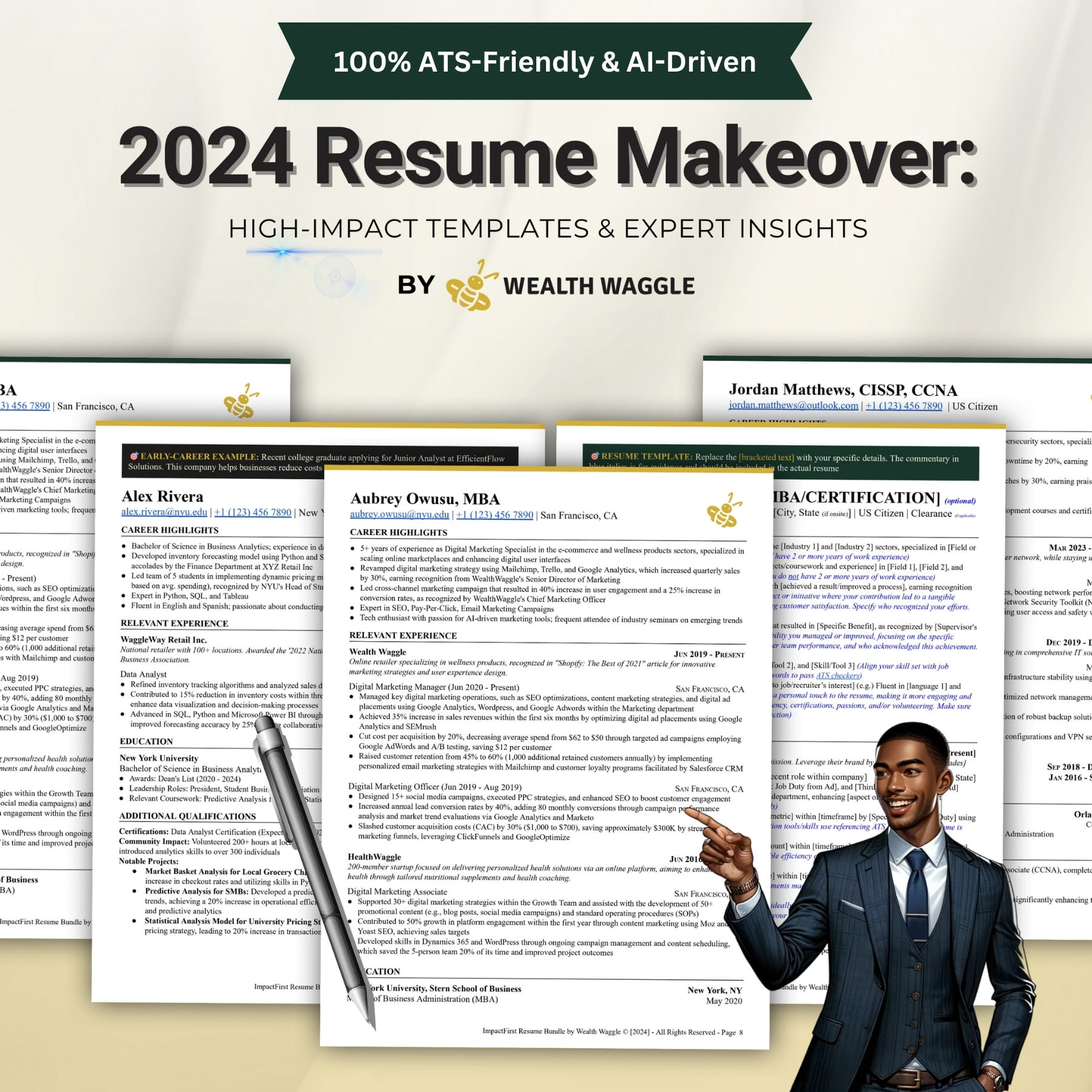
ImpactFirst Resume Bundle (ATS Friendly + AI Driven)
Boost interview callbacks with the ImpactFirst Resume Bundle from Wealth Waggle, expertly designed to get you hired in 2024’s competitive job market. Our resume templates and guides are crafted based on extensive research into recruiter recommendations and expert advice in today’s industry.
Step 2: Choose the Right Resume Format
Your resume format is like the foundation of a house—get it wrong, and the whole thing collapses.
Option 1: Functional Resume (Skills-First)
Who It’s For: People with little to no direct experience in the new field.
- Focus: Skills and achievements first, work history second.
- Why It Works: Hiring managers see your capabilities upfront.
Downside: Some recruiters dislike functional resumes because they think you’re hiding something. Use this if your work history doesn’t align much with your new career.
Option 2: Combination Resume (Skills + Experience)
Who It’s For: People with transferable skills and relevant accomplishments in their work history.
- Focus: A mix of skills and chronological work history.
- Why It Works: You get the best of both worlds—skills are highlighted without erasing your work history.
Option 3: Chronological Resume (Traditional)
Who It’s For: Career changers with some relevant roles in their history.
- Focus: Work history listed in reverse order.
- Why It Works: Familiar to hiring managers, but only use this if your work experience aligns with the new field.
Step 3: Write a Bold Career Objective or Summary
This is where most people blow it. A bland, generic opening like “Seeking an exciting opportunity to grow in a new field” isn’t just ineffective—it screams “lazy.”
Instead, write a value-driven statement that connects your past experience with the company’s needs.
Wrong Example:
“Motivated professional seeking an opportunity in marketing.”
Right Example:
“Creative problem-solver with 5+ years in customer service, transitioning into digital marketing. Recently certified in Google Analytics and SEO, with a proven track record of increasing client satisfaction by 20% and driving engagement strategies.”
Why does this work? It shows the recruiter:
- You’ve got relevant skills (problem-solving, customer engagement).
- You’ve upskilled (Google Analytics, SEO).
- You’ve delivered results before (20% satisfaction boost).
Step 4: Highlight Transferable Skills (Your Golden Ticket)
Transferable skills are what connect the dots between your old career and the new one. These are abilities that apply across industries, like leadership, problem-solving, or communication.
Success Story: Car Salesman to Software Engineer
Guilherme Verardo switched from being a car salesman at Mercedes-Benz to a software engineer at DICK’s Sporting Goods. He leveraged skills like time management and public speaking from his previous job, which helped him succeed in his new tech role. His story emphasizes the value of transferable skills and the importance of following one’s passion[7].
How to Identify Your Transferable Skills
- Step 1: Read 5–10 job descriptions for roles you’re targeting.
- Step 2: Highlight the recurring skills and keywords (e.g., “project management,” “collaboration,” “data analysis”).
- Step 3: Match those skills with your past experience.
Example Transferable Skills:
| Skill | Old Career (Retail Manager) | New Career (Sales) |
|---|---|---|
| Leadership | Managed a team of 15 employees. | Led high-performing sales teams. |
| Customer Engagement | Boosted in-store satisfaction scores by 30%. | Used CRM tools to strengthen relationships. |
| Problem-Solving | Reduced shrinkage by identifying process flaws. | Closed deals by addressing client pain points. |
Overcoming Hiring Manager Concerns About Career Changes
Hiring managers might hesitate to take a chance on someone without direct experience. Here’s how to counter those concerns head-on:
- Concern 1: Lack of Industry Experience.
Rebuttal: “I may not have direct industry experience, but I’ve already applied [transferable skill] to achieve [specific result]. For example, in my previous role, I managed [X project], which directly aligns with [Y requirement].” - Concern 2: Uncertainty About Commitment.
Rebuttal: “I’ve taken proactive steps to upskill, including earning certifications in [specific tool or process]. This shows I’m fully committed to excelling in this field.” - Concern 3: Culture Fit.
Rebuttal: “Having worked in [different environments], I bring a fresh perspective that complements your team’s expertise. I thrive in collaborative spaces and adapt quickly to new challenges.”
Connecting the Dots: How Your Past Leads to Your Future
Understanding how to link your old skills to new opportunities is the foundation of a successful career change resume. Below is a visual flowchart to guide you through the process—from identifying your core strengths to aligning them with new role requirements and showcasing measurable achievements.
Career Change Resume Flowchart
Old Skills
Highlight key abilities from your previous career.
Transferred Skills
Identify abilities that apply to your new career.
New Role Requirements
Align skills to the job description and industry demands.
Achievements
Quantify results to showcase your impact in previous roles.
Step 5: Reframe Your Experience to Match the Role
Nobody’s hiring you for what you did; they’re hiring you for what you can do for them. This is where you reframe your past experience to highlight the outcomes you achieved.
Success Story: Teacher to Software Engineer
A former teacher transitioned into software engineering after realizing her passion for coding as a form of problem-solving. Within four months, she successfully landed a job in the tech industry, demonstrating how skills from teaching, such as communication and problem-solving, can be reframed for new roles[2].
Example: From Teaching to Corporate Training
Old Way (Teacher):
“Planned and delivered lessons to 30 students daily.”
Reframed for Corporate Training:
“Designed and delivered engaging training sessions for groups of 30+, improving learning outcomes by 15%.”
Example: From Retail to Digital Marketing
Old Way (Retail):
“Managed store inventory and assisted customers with purchases.”
Reframed for Digital Marketing:
“Analyzed purchasing trends to optimize product placement, increasing sales by 12% through targeted marketing strategies.”
Pro Tip: Use metrics wherever possible (percentages, dollar amounts, time saved). Numbers create credibility.
Step 5.1: Use Metrics to Make Your Achievements Pop
Quantifying your achievements adds immediate credibility. Numbers not only grab attention but also show hiring managers that you’re results-oriented.
Examples of Metrics-Driven Achievements:
- “Increased customer satisfaction scores by 20% within six months.”
- “Cut project delivery time by 15% through efficient resource allocation.”
- “Grew social media engagement by 45%, boosting brand visibility.”
When framing your experience, always ask yourself:
- How many? (e.g., customers served, projects managed, revenue generated)
- How much? (e.g., percentage improvement, cost savings)
- How often? (e.g., frequency of task or scale of operations)
Step 6: Add Relevant Certifications, Education, and Projects
If you’re lacking experience, certifications and projects show initiative and competence. They signal to employers, “I’m serious about this transition.”
Example Education Section:
Google Analytics Certified | Google | Completed 2023
Digital Marketing Certification | Coursera | Completed 2023
Step 7: Tailor for Each Job
The best resume is tailored. It speaks directly to the job description and uses the language the company uses.
Success Story: Finance to HR
A young woman transitioned from managing numbers at JPMorgan Chase to focusing on people at The Muse. She aligned her resume with her personal strengths and interests, which made her stand out as a candidate. Her story highlights the power of tailoring applications to reflect your desired career path[2].
How to Tailor:
- Identify the top 3 skills or qualifications listed in the job description.
- Reorganize your resume to highlight those skills.
- Use the same keywords from the job listing (important for Applicant Tracking Systems).
Step 8: Nail the Cover Letter
Your cover letter is your chance to explain the why behind your career change. Keep it short, specific, and focused on the company’s needs—not your life story.
Cover Letter Example:
“I’m a retail manager transitioning into sales. In my previous role, I led a team of 15 to exceed sales goals by 25% in two consecutive quarters. Recently, I completed Salesforce training to better understand CRM tools and their role in client engagement. I’m excited to bring this blend of leadership, results-driven strategies, and technical skills to your team.”
Step 9: Avoid Common Mistakes
1. Being Too General
Mistake: Listing vague responsibilities like “Handled tasks as needed.”
Fix: Highlight specific outcomes (e.g., “Increased sales by 20% in Q1”).
2. Ignoring Gaps
Mistake: Leaving gaps in your work history unexplained.
Fix: Briefly address them (e.g., “Took a career break to complete advanced certifications”).
Step 10: Get Feedback and Iterate
Your first draft won’t be perfect, and that’s okay. Share your resume with trusted peers, mentors, or professional resume writers to get an outside perspective. Ask specific questions like:
- Does this clearly connect my past to my future goals?
- Are there any gaps or weak points that need improvement?
- Does it look professional and concise?

Bonus Tip:
Building Your Career Change Personal Brand
A killer resume is essential, but it’s just one piece of the puzzle. To stand out as a career changer, you need a cohesive personal brand:
- Update LinkedIn: Create a headline that reflects your pivot (e.g., “Customer Service Expert Transitioning into UX Design | Empathy-Driven Solutions”).
- Create a Portfolio: Showcase real or simulated projects to demonstrate your skills.
- Engage Online: Post content about industry trends or participate in discussions to demonstrate your expertise and passion.
Leverage Networking and References
Your resume is just one piece of the puzzle. In a career change, your network can be your greatest asset. Here’s how to leverage it:
- Informational Interviews: Reach out to people in your desired industry. These conversations can give you insights and potentially lead to referrals.
- LinkedIn Optimization: Update your profile to reflect your career change goals and skills. Engage with content from industry leaders to increase your visibility.
- References Matter: Choose references who can vouch for transferable skills. If possible, include someone in your target industry to add credibility.
Real-Life Success Stories: Inspiration for Your Career Change
Many professionals have successfully pivoted their careers by leveraging transferable skills and telling compelling career stories. Here are a few examples to inspire you:
- Marketing to Teaching: A marketing professional in their late 30s transitioned into teaching photography at a high school. This decision, though less lucrative, provided greater personal fulfillment and a sense of giving back to society[1].
- Teacher to Software Engineer: A former teacher discovered her passion for coding and transitioned into tech within four months by reframing her skills for the industry[2].
- Car Salesman to Software Engineer: Guilherme Verardo transformed his sales expertise into a thriving tech career by showcasing skills like time management and public speaking[7].
These stories show that a strategic approach, resilience, and confidence can help you achieve your career goals.
The Power of Failing Forward
Rejection is part of the process. Each “no” is a chance to refine your pitch. Learn from feedback, adapt, and keep going. The most successful career changers are the ones who saw failure as a stepping stone, not a roadblock.
Final Thoughts
Switching careers is bold—it shows you’re willing to bet on yourself. Your resume should reflect that confidence. Highlight your transferable skills, back them up with metrics, and make it crystal clear why you’re the right fit for the job.
Don’t let inexperience hold you back. Use the strategies in this guide, and you’ll turn your career change into a career upgrade. Now, go make it happen.
Ready to land your dream job?
Stop guessing and start succeeding. The Impact-First Resume Bundle has everything you need to create a winning resume that stands out—even if you’re changing careers.
Start now and take control of your future.
Citations:
[1] https://www.reddit.com/r/findapath/comments/11nalyg/people_who_changed_their_careers_at_30_what_was/
[2] https://www.themuse.com/advice/9-career-change-stories-thatll-inspire-you-to-take-the-leap
[3] https://www.inc.com/business-insider/people-who-found-success-and-changed-careers-after-30-years-old.html
[4] https://www.careershifters.org/expert-advice/why-a-compelling-story-is-vital-for-career-change-and-how-to-craft-yours
[5] https://www.freestyle-careers.com/new-blog/how-to-tell-a-better-career-story
[6] https://www.saaspirin.co/blog/what-is-and-how-to-write-a-success-story-with-examples-templates
[7] https://www.techelevator.com/career-change-success-stories-real-life-inspiration/
Talk Resumes with Wealth Waggle
Perfect your resume with AI-assisted feedback and tips (using the latest recruiting intelligence).